
I could say so much about The Marvels: how I could watch Iman Vellani (Ms. Marvel) forever; how Brie Larson (Captain Marvel) lets emotions leak past her “I’m fine” face; and how Teyonah Parris (Monica Rambeau/Spectrum?) perfectly blends childhood betrayal and performing her duty even if- and especially when- they conflict.
Maybe one day, I will share some critique of the film, but today is not that day. Today, I will revel in the pure joy it brought me, and the lingering feelings I have about Zawe Ashton, who played Dar-Benn.
Dar-Benn is our villain, but among the Kree people, she is the hero.
Warning: there are spoilers for Captain Marvel below and light spoilers for The Marvels.

The Kree and Skrull and Shades of Grey
In Captain Marvel, the Kree are pretty well painted as the villains. At first, we think Danvers is one of them (if you went in without knowledge of the comics like me), but soon that’s turned on its head, and we’re left with a juicy villain– never a love interest, thankfully– in Jude Law.
After seeing Captain MarveI, I returned to Guardians of the Galaxy‘s opening with Ronan the Accuser, easily in my top 3 introductions to MCU villains. Besides the fascinating visuals, his speech is the epitome of efficient monologuing:
They call me terrorist, radical, zealot because I obey the ancient laws of my people, the Kree…. and punish those who do not. Because I do not forgive your people for taking the life of my father, and his father, and his father before him. A thousand years of war between us will not be forgotten!
Ronan the Accuser
In barely 50 words, the Guardians movie sets up our villain so that we both fear him and kind of get it, too. They did the same with Gorr the God Butcher and Killmonger, setting up their backstory so the audience could empathize. We consider how we would react, how that pain would change us, and how we’d move forward.
And that’s a good thing. We should embrace that conflict with our children to show how good and evil are not always black and white.
Every Villain is the Hero of Their Own Story
Secret Invasion does this beautifully in an otherwise confounding series. You get why many Skrull feel they have no choice; they’ve been refugees promised a home for as long as most of these characters have been born. You don’t need to look far to see that played out in today’s world; these stories can open the conversation to how, no matter the cause, it’s your actions that matter.
Spoiler for Secret Invasion: Yet with that much pain behind their actions, even Gravik (Kingsley Ben-Adir), the leader of the Skrulls in hiding, goes too far for his followers. In the last two episodes, they rebel against their rebel leader, as the Skrulls collectively believe he is going too far once he targets within the group.
Still, it’s hard not to see his point until he starts killing his friends for questioning him.
Stop reading if you don’t want to know slight spoilers for The Marvels
Dar-Benn, Revenge, and Resources
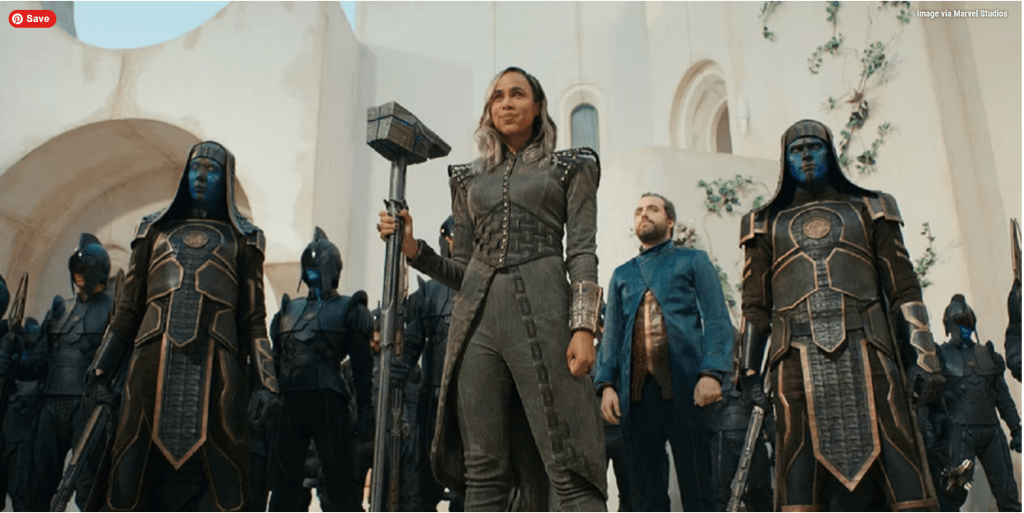
Dar-Benn witnessed Captain Marvel destroying the Kree’s god (the AI Supreme Commander), which wiped out their sun and most resources needed to live. Without going into too much detail, I found my feelings toward her changed drastically once I understood she wasn’t just using a powerful ancient weapon to build the Kree Empire, but also to keep her people alive.
The fact that she had to take such resources from other lands, effectively dooming them to the same life from which she wanted to rescue her people, well, that’s again where you can have a conversation about how bad choices for the right reasons are still bad choices. The Kree had built their Empire by subjugating many other nations and species, but in this film, they conquered to survive. I could understand her immediate motivations, disagree with her methods, and almost trusted the redemption opportunity that Captain Marvel offered her. Empathy did not release her from the severity of her actions.
Dar-Benn is undoubtedly the hero of the Kree, whereas Captain Marvel was nicknamed “The Annihilator” because of her impulsive, revengeful actions. Heroes and enemies are a matter of perspective.
Is It Okay to Like the Villain?
I run through many villains in this article, but why is empathy for the villain okay? Our villains teach us how to shift the perspective from our own to a broader worldview. In our upcoming podcast series, “OutThink the Classics: Exploring Evil,” we dissect specific villains in more detail (subscribe below to get notified when it premieres). While it can often be hard to launch into a literary discussion of evil and fate and societal constructs, the following phrase can unlock a whole new perspective for our children when viewing villains, one they can carry through childhood, their teenage years, and hopefully return to when faced with more nuanced situations as adults:
The villain thinks they are the hero in their own story.
If more people today felt empathy and had the ability to see life through another person’s eyes, I sincerely believe the world, most notably the United States, would be a better place to live.
Read more: How “The Bad Guys” Teach Kids Empathy
Photo/Image Credit: Canva, Marvel, & Shutterstock
Sources:
- “Imperialism: Crash Course World History #35,” uploaded to Crash Course, 20 September 2012, https://www.youtube.com/watch?v=alJaltUmrGo.
- Villains Wiki, https://villains.fandom.com/wiki.
Discover more from I watch YouTube so you don't have to.
Subscribe to get the latest posts sent to your email.
One thought on “The Marvels: When the Villain is the Hero of Their Own Story”