
I originally wrote this when my friend asked how hard the mother’s death in Miyazaki’s The Boy and The Heron would be for a child very sensitive to death. I told her it was not probably good in theaters because the first five minutes is so intense, but ultimately the story is a revelation in grief.
I revisited these dialogues last week when my father-in-law died. Maybe laying this foundation helped with their first experience of death; it sure felt like it, although I’m sure we will return to these ideas frequently.
I don’t remember a time when our kids didn’t ask questions. I do remember the distinct look on my toddler’s face once he saw Mufasa’s injuries, and understood through Simba that his father was not waking up.
He didn’t ask that day. He just stared, intently and quietly.
They’ve since asked (a lot) and have their own ideas of what might happen when you die. It’s made for some hilarious and heartbreaking moments, like when the younger 3 year-old asked how old my mother is took a minute, then said:
“Grandma, I’ll be really sad when you die.”
Dialogues: What is Death?
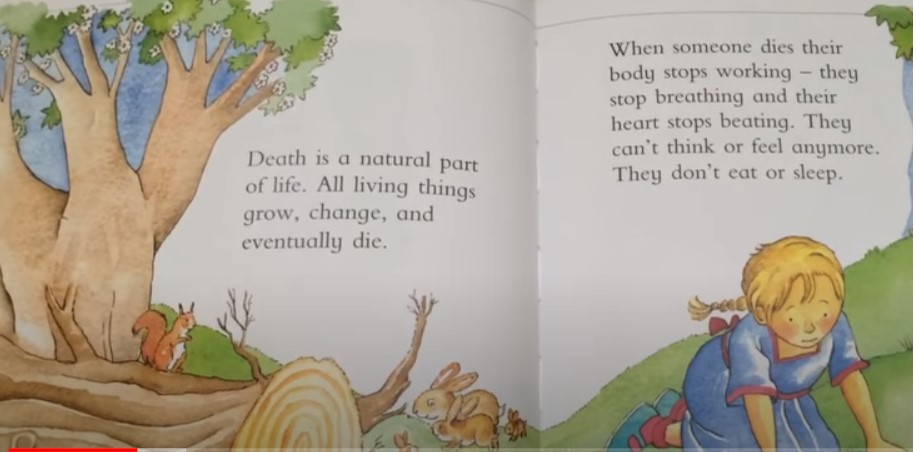
If you struggle to discuss death because you believe in its finality and no afterlife the first step is to actively use the words “die,” “died,” “death,” and so on. Softening the reality with terms like “passed away” might feel better to adults, but is harder for children to understand. Additionally, growing up with these mythologies surrounding death may make it harder for children to trust you once they learn the truth.
I believe that if your child knows they can ask you anything, and you’ll tell them the truth when they do, you’re more likely to keep their trust as they grow up and encounter outside influences.
We think we’re protecting them, but they want to know the truth.
How do I Explain it to a Child?
Take a deep breath, stay calm, and allow your child to express whatever they feel without judgment.
- Be honest. When someone dies, they stop breathing, and their brain stops working, so the body and mind shuts down.
- Say what happens after a death. People often bury the dead in a big airtight box called a casket, and their loved ones come together to celebrate their life, and share memories.
- It’s normal. It might sound scary, but death is a natural part of life. When I was young, the idea that one sin would land me in an eternal fire of Hell was much scarier than not breathing anymore.
- Yes, we miss people who die. I often point to small items that remind me of my grandparents and tell stories about them. My youngest will often say, “Mommy, I am sorry that your grandparents are dead.” And I replied, “Yes, but they lived over ninety years, so they were ready to go.” Talking about younger people dying is harder to understand, but still deserves the truth.
- Let them feel what they feel. Encourage them to use emotional language. Children react differently. One might take it just fine, then months later cry to sleep because they’re thinking about the finality of life. It’s important to stay calm, validate how they feel, and continue to answer them as honestly as is developmentally appropriate. I didn’t go into detail on cremation at first, thinking that would be too scary, for instance. But when they asked more about what happens to a body after they die, I did tell them, focusing on the ritual of spreading ashes.
- Don’t dismiss the topic or invalidate their feelings. Our kids often tell us they’ll be sad when we die. It was weird at first, but I usually hug them and reply calmly, “Yes, that will be sad, I agree,” and follow their line of thought. Usually, they drop it after that.
Sometimes they just had to get that big feeling out of their head so it feels less scary.
- Be ready to talk about it at a moment’s notice. The Neverending Story is a great example of this. When his horse Atreyu drowns, we are allowed as an audience to feel that pain and sadness, sit with it a moment, then are literally flown out of our feelings by the Luck Dragon. After the movie, our kids wanted to talk about it while they processed the story.
It might take a few viewings/explanations for a child to understand, but when they do (like when you watch The Lion King), be ready to breathe and tell them the truth.
This is hard. It doesn’t stop being hard. But allowing your child(ren) to understand death ahead of time will make the first time they experience a loved one’s death just a little easier.
Media to introduce the Dialogue:
- To introduce the subject gently, The Boy and the Heron ultimately brings Mahito and his mother together in a way to show it’s the life we live that matters, not the death we grieve.
- I Miss You: A First Look at Death by Pat Thomas
Discover more from
Subscribe to get the latest posts sent to your email.
