With The Taming of the Screens premiering last weekend, it’s time to sit down and explain how Shakespeare ties into digital literacy.
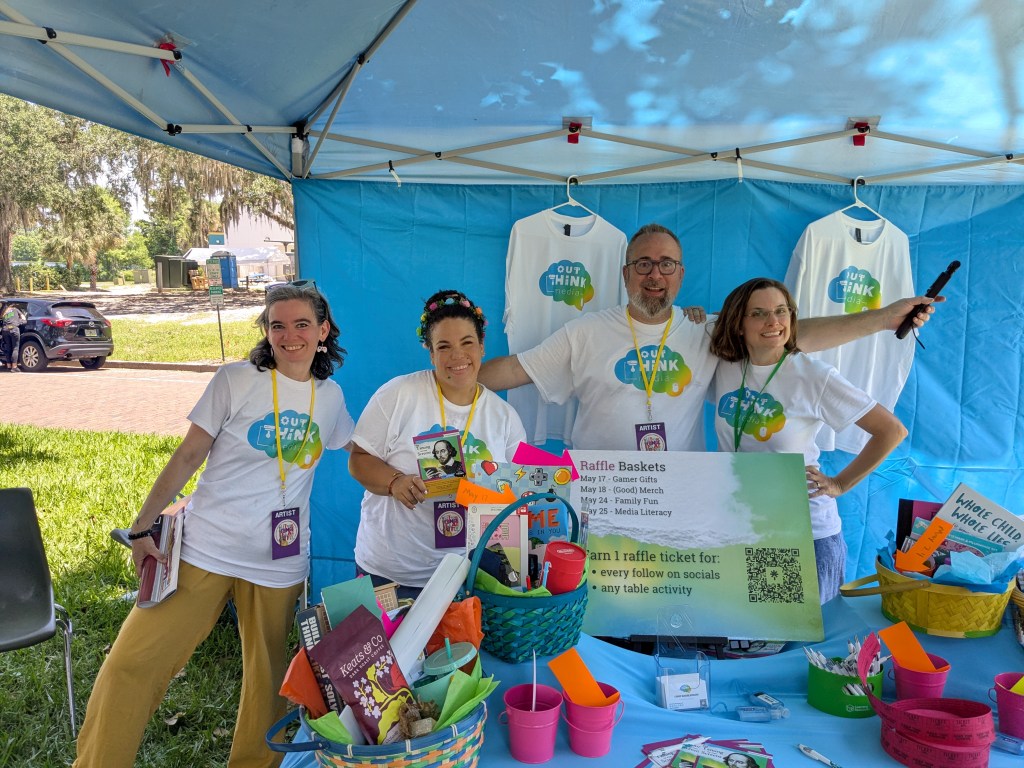
Thanks to everyone who joined us at the Orlando Kids Fringe Festival for activity tables and at our new workshop, performed for free in the Courtyard each day.
Why use Shakespeare for digital literacy?
If you can decode Shakespeare in 2025, you have the skills to be a critical thinker and smart audience of the media you intake. Just understanding Shakespeare’s scenarios can be great ways to rehearse difficult situations, and I especially love using Romeo and Juliet as a text for these exercises. It all stems from a principle I’ve carried into classrooms for years at teach-ins and workshops: words are powerful, there are people writing these words, and you can use that power to communicate.
Additionally, you can’t simply be a passive observer of words and meanings. We must all be our own Text Detectives through life for a fuller understanding and awareness of how words affect our lives.
Okay, but…how?
Great question! Here are the pieces we workshopped in the Fringe show and how they tie into digital literacy:
- We use Shakespeare code names onstage instead of our real names for privacy, like we should do online.
- Code names included Robin Goodfel, ObeKing, ViolaO, and more. Students may also create their own codenames
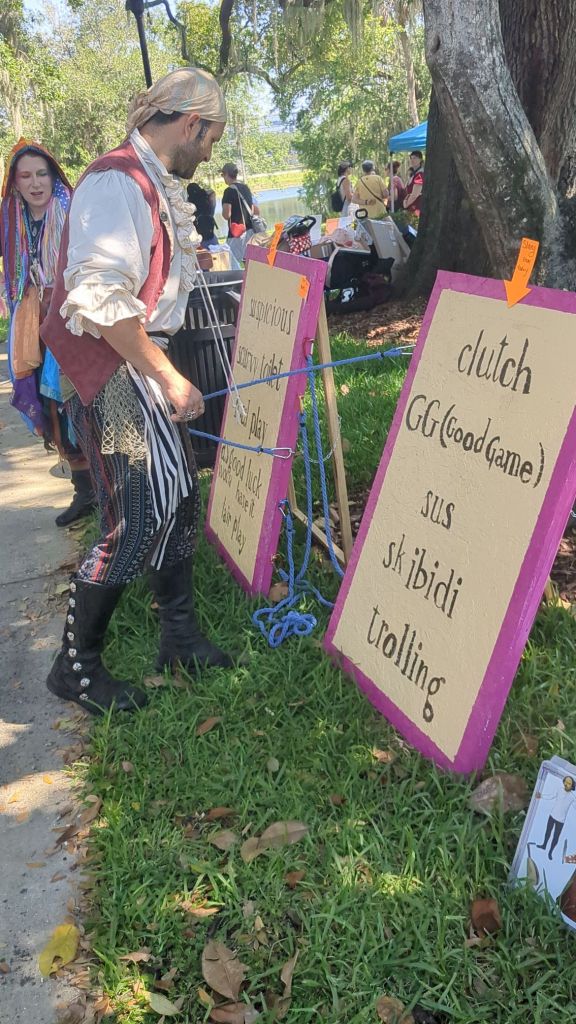
- The Story of Slang: the words Shakespeare created over 500 years ago are related to or mean the same as our slang today. Words have long evolved and everything you read is written by someone, by a human (we’ll add the nuance of AI later).
- Here we had 2 large boards with Shakespeare’s slang on the left and modern day slang on the right. We talk students through how to decode each word or phrase and they use large ropes to connect one side to the other.
- Friend, Foe, or Troll is our guessing game, where kids read phrases by Shakespeare and choose whether they’re faced with a friend, foe, or troll!
- Some phrases got a laugh, like “Let’s meet as little as we can.”
- Many had kids of all ages really inquiring about the difference between a foe or troll, and how the language informs us.
- Of course I got a little etymology lesson into the show, linking the troll in 3 billy goats gruff with trawling for bait. More on this soon!
- Inside Romeo & Juliet: children can’t always calm themselves down or make rational decisions in the moment of distress and in the moment of stress. So we rehearse these scenes of escalating trolling to help them build the neural pathways to do this automatically. That way it becomes a natural part of their intake of media versus something they have to be told to do.
It was exciting to workshop these scenes in such a vibrant setting, and trust me, there’s a lot more in the works!
If you’re interested in hearing what Taming of the Screens can offer your school or parent group, please email tamingofthescreens@outthinkmedia.com
Discover more from I watch YouTube so you don't have to.
Subscribe to get the latest posts sent to your email.
